BUDGET
Quartz fashion
- Miyota 2035 quartz
- 316L 40mm, mineral
- Printed dial, silicone
Indicative / unit$10 – $25

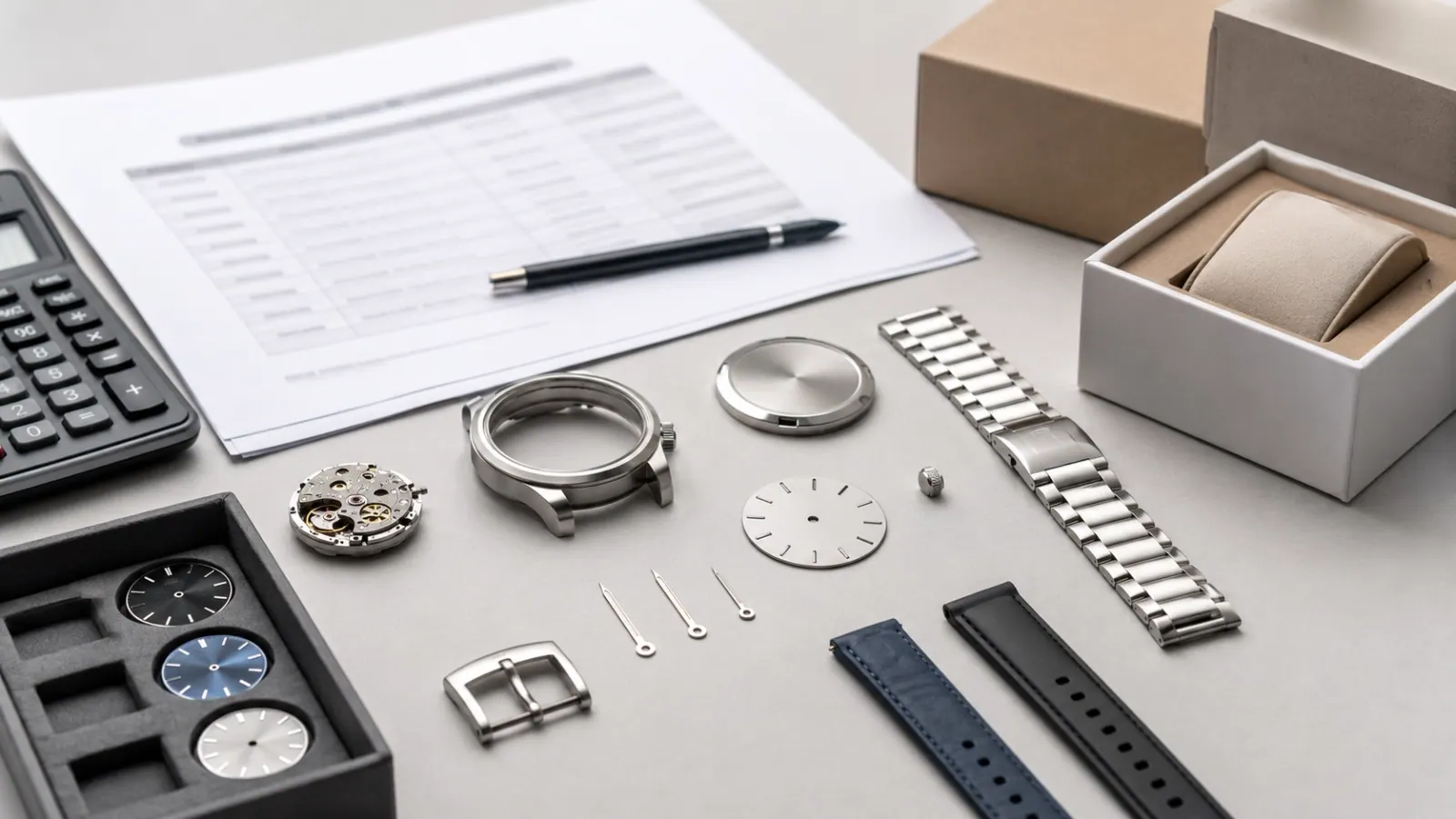
The honest answer: it depends on the movement, the materials, and how many you order. Here is the full breakdown — every line item, with indicative ranges and three worked examples.
Per-unit ranges for each part of the watch. The movement is almost always the largest single line.
| Movement | $4 – $180+ biggest driver — quartz lowest, Swiss automatic highest |
|---|---|
| Case + caseback | $6 – $40 316L standard, titanium / 904L premium |
| Dial + hands | $3 – $25 printed lowest, applied / enamel premium |
| Crystal | $1 – $12 mineral lowest, sapphire + AR premium |
| Strap / bracelet | $2 – $30 silicone lowest, steel bracelet / leather higher |
| Assembly + QC + regulation | $3 – $15 per-unit labour and testing |
| Packaging | $1 – $12 poly bag to full branded box set |
| One-time tooling | $0 – $3,000+ amortized across the run |
Indicative ex-works USD · low MOQ · varies by spec and quantity
Two costs are fixed no matter how many watches you build: one-time tooling (dies, molds, print screens) and production setup. Spread those across 100 units and each watch carries a large share; spread them across 1,000 and the share shrinks dramatically.
Component and movement pricing also improves at volume. The steepest per-unit drop is between a single sample and the first few hundred pieces — which is why we sample first, then quote the run.
Tell us what you want to build. We'll come back with specs, costs, and a sample plan.