
§ 01Why the strap matters
The strap is the part of the watch that touches the wearer all day, and it changes the character of a watch more than almost any other component. The same case reads as dressy on leather, sporty on rubber, or utilitarian on a NATO. For a brand, offering the right strap — or a few interchangeable options — is an easy way to widen a watch’s appeal.
The spec that comes first: lug width
Every strap decision hangs on the lug width — the gap between the case lugs, in millimeters. 20 mm is the modern default for men’s watches, 18 mm suits smaller and dress cases, 22 mm suits divers and tool watches. Most straps taper (a 20 mm strap narrowing to 16 mm at the buckle) which slims the look on the wrist. Choosing a standard width matters commercially: a 21 mm lug locks your customers out of most of the aftermarket, and reviewers notice.
§ 02Leather
Leather is the classic dress strap — warm, supple, and increasingly characterful as it ages. It is the natural pairing for dress and heritage watches.
Grades, honestly labelled
Leather marketing is a minefield, so here is the plain version. Full-grain keeps the hide’s natural surface and ages best — it is the premium choice. Top-grain is sanded and corrected, more uniform, slightly less characterful. “Genuine leather”, despite the reassuring sound, is the lowest real-leather grade — split layers bonded and embossed. Exotic textures (alligator-grain embossing on calf, suede) shift the look without exotic prices. On a custom build the grade you choose is a line item we quote explicitly, because two straps that photograph identically can differ several-fold in cost and lifespan.
The trade-off is water: leather absorbs sweat and moisture, stiffens, and eventually cracks if worn swimming. It suits everyday and formal wear, not tool use — and it lasts years longer with basic care, which we cover in the leather strap care guide. Branded stitching and a signed buckle make it a strong canvas for a logo.
§ 03Steel bracelet
A 316L stainless steel bracelet is the most durable and premium-feeling option — and the most expensive to tool and assemble. A bracelet adds real weight and a finished, integrated look.
| Pattern | Character | Common on |
|---|---|---|
| Oyster (3-link) | Tool, solid, sporty | Divers, sport watches |
| Jubilee (5-link) | Dressier, more flexible | Everyday, heritage |
| Milanese / mesh | Fine woven, slim | Dress, minimalist |
Bracelets need sizing (removable links, ideally screw-pins rather than friction pins) and a clasp — a deployant or fold-over with a signed cover is another branding surface. Because of the tooling, bracelets carry the highest per-unit cost of the common strap types; where that sits in a full build is itemized in our OEM cost guide. End links matter too: solid end links that fit the case tightly are one of the quiet quality tells buyers pick up in the first ten seconds of handling.
§ 04Rubber & FKM
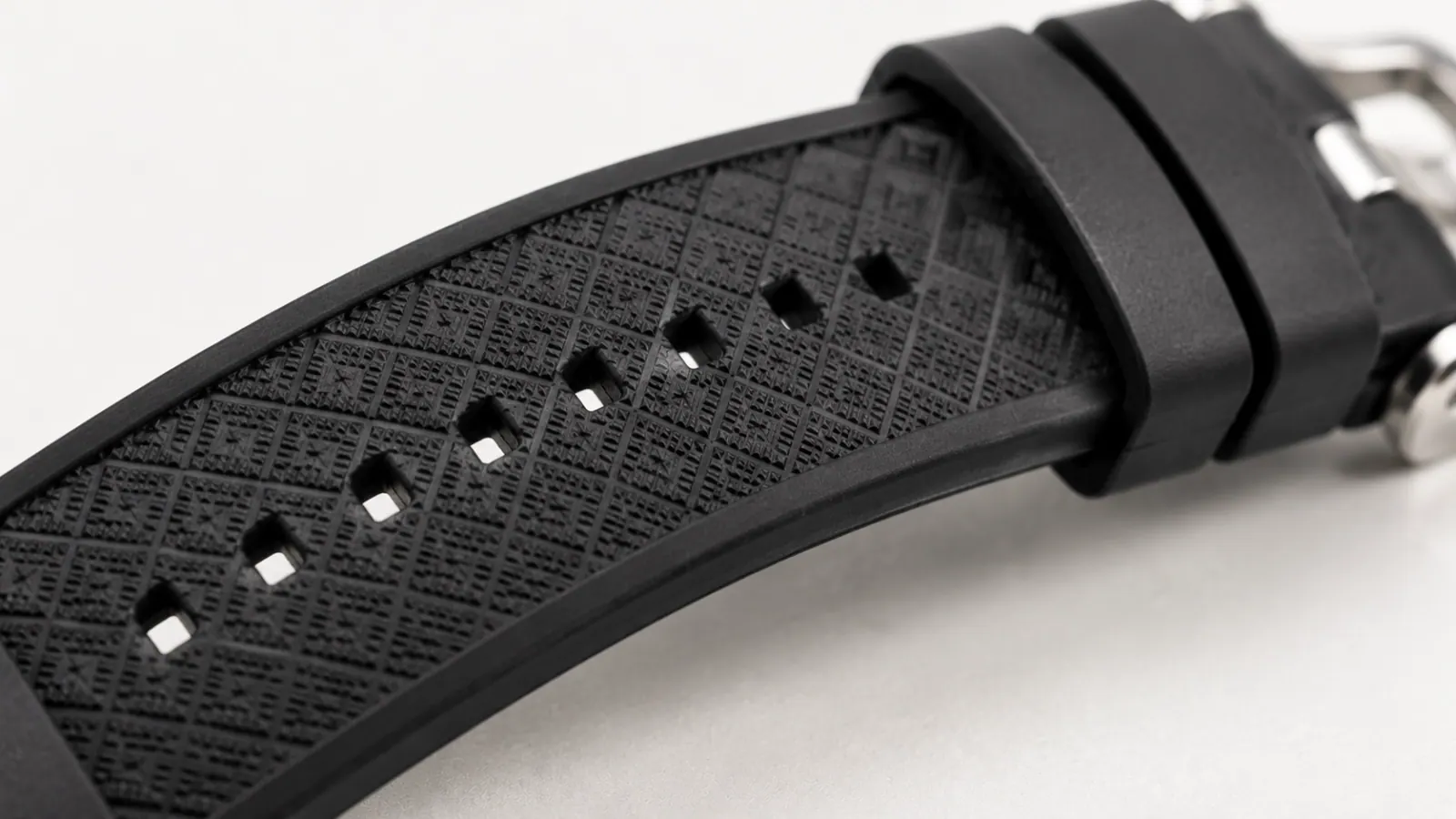
Rubber is the sport and dive strap: waterproof, sweat-proof, and comfortable in heat. There are two tiers. Silicone is soft and cheap but attracts dust and degrades faster. FKM (fluoroelastomer) is the premium grade — chemical-, heat-, and UV-resistant, with a smooth surface that resists lint.
Which rubber for which build
For a serious dive watch — the kind specced alongside a rotating bezel and 20 ATM — FKM is the only rubber we recommend: it shrugs off sunscreen, salt, and chlorine that stain and swell silicone, and it holds its color for years. Silicone earns its place on budget sport builds and promotional pieces where the price point rules. A custom texture (tropic pattern, brand-embossed keeper) is a tooling decision on either material; on FKM it is what separates a strap that reads “sports brand” from one that reads “fitness tracker”. If the build is a diver, the strap spec belongs in the same conversation as the case — see the dive watch manufacturing page.
§ 05NATO & nylon
A NATO is a one-piece woven nylon strap that threads under the caseback, so the watch is held even if a spring bar fails — a genuine safety feature on tool watches. It is durable, washable, quick to change, and the cheapest strap to produce. Single-pass and perlon variants offer slimmer alternatives.
NATOs add casual, military character and are easy to offer in multiple colorways as low-cost add-ons — a smart way to extend a single watch into a range. The hardware grade is the tell: brushed 316L keepers and a signed buckle lift a NATO from disposable to deliberate.
§ 06Side-by-side comparison
| Material | Best for | Water | Cost |
|---|---|---|---|
| Leather | Dress, heritage | Avoid | Low–Mid |
| Steel bracelet | Premium, everyday | Fine | High |
| FKM rubber | Dive, sport | Excellent | Mid |
| Silicone | Budget sport | Excellent | Low |
| NATO / nylon | Field, tool, casual | Good | Lowest |
Two cross-cutting specs apply to all of them. Quick-release spring bars let buyers swap straps without tools and have become the expected standard on strap builds. Taper — how much the strap narrows toward the buckle — quietly changes how the whole watch wears: a strong taper reads elegant, a straight cut reads tool.
§ 07How to choose for your build
Match the strap to the watch’s character and price point: leather for dress, a bracelet for a premium all-rounder, FKM or silicone for sport and dive, NATO for field and casual. If your budget allows, ship on one strap and offer others as branded add-ons — it lifts the average order value and lets buyers personalize.
We supply all of these with branded buckles, clasps, and quick-release spring bars. Tell us the look and we will spec the strap into your quote within 24 hours.