
§ 011. Design & tooling
Production starts with a buildable design. Your sketch or specification is turned into a technical drawing, and the one-time tooling is cut — the dies that form the case, the molds, and the screens that print the dial. Tooling is a fixed cost amortized across the run, which is why per-unit price falls at volume.
What the drawing actually specifies
The technical drawing is the contract between your idea and the machines: case dimensions with tolerances, the finish plan surface by surface (brushed here, polished there), dial colors as Pantone references, the printing layers in order, hand lengths against the dial’s tracks, lume placement and grade, crystal spec, gasket positions, and the engraving artwork for the caseback. A thorough drawing is what makes the sample right the first time — most “factory mistakes” in this industry are really ambiguities that were never pinned down on paper.
§ 022. Component production
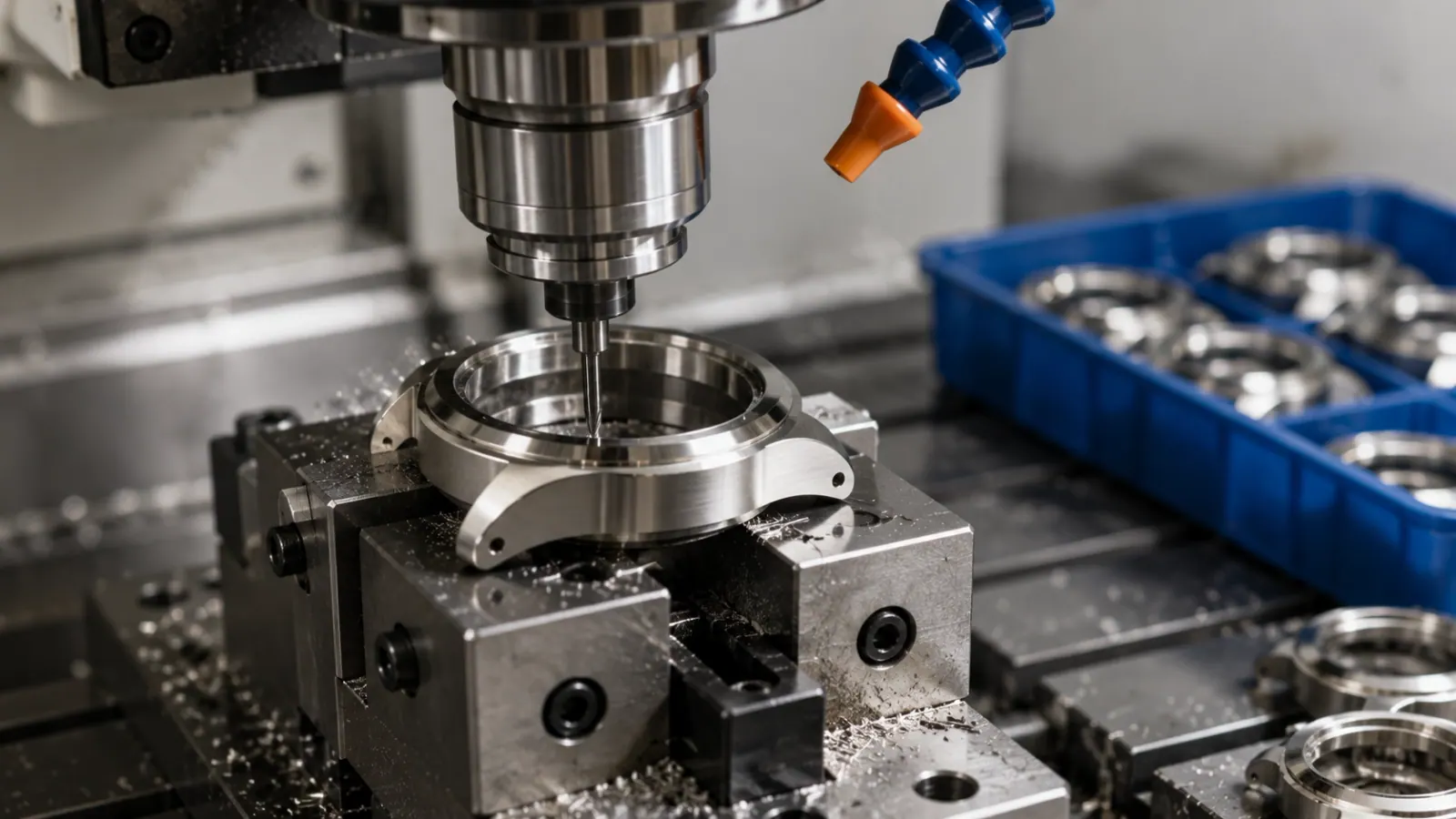
With tooling ready, the parts are made: cases are CNC-machined and finished, dials are printed or have applied indices, hands are produced, and bezels and crystals are prepared. Movements are sourced from Miyota, Seiko, Ronda, or Sellita to your spec — the trade-offs are covered in our movement comparison.
Components are batch-inspected against the drawing before they reach assembly — dials under magnification for print edges and dust, cases for finish and thread quality, hands for length and lume fill. Catching a bad batch here costs a day; catching it after casing costs a rework loop.
§ 033. Sampling
Before any volume, a physical sample is built and sent for approval. This is your chance to check the real weight, dial finish, lume, and clasp action, and to refine anything that does not match the vision. Production does not begin until you sign off the sample.
Treat the approved sample as the legal reference for the run — it is called a “golden sample” for a reason. Every QC judgment downstream (“is this dial too warm?”) is settled by comparing against it, not against memory or renders. Keep one; we keep its twin.
§ 044. Assembly & regulation
Approved, the run goes to assembly. The movement is fitted, the dial and hands are set, the case is sealed against its gaskets, and the strap or bracelet is attached. Mechanical movements are then regulated — adjusted on a timing machine across positions so each watch runs within its accuracy tolerance.
The details that decide feel
Assembly quality lives in millimeter-fraction decisions: hands pressed to exact heights so they never clip each other or the dial, the date wheel aligned dead-center in its window, the crown tube torqued so winding feels smooth rather than gravelly, dust control at the casing station so nothing lands on the dial in its last open second. None of these appear on a spec sheet — they are the difference you feel when you handle a well-assembled watch, and they are pure labor discipline.
§ 055. QC & water testing
Every unit passes quality control: a water-resistance test to its rating, a timing check, a function test of the crown, pushers, and date, and a cosmetic inspection under magnification. Failures are pulled and reworked — then retested from the start, because a reworked watch re-enters the line as an unproven one. Test data is recorded and available on request.
See how we inspect every batch — and what happens if a defect surfaces after delivery — in our QC and after-sales process.
§ 066. Packing & shipping
Passed units are packed to your spec — pouch or full branded box with papers, warranty card, and tags — then cartoned with corner protection and shipped worldwide with tracking. Compliance documentation (CE, RoHS) travels with the shipment for customs and marketplace requirements.
The timeline, stage by stage
| Stage | Typical duration |
|---|---|
| Drawing & tooling sign-off | 3–7 days |
| Sampling | 1–2 weeks |
| Production after approval | 35–45 days |
| Reorders (tooling exists) | Production time only |
That is the whole line, from drawing to door. Send your specs through the OEM/ODM page for a quote — with the stages, timeline, and itemized cost — within 24 hours.